Tuesday, August 30, 2011

Farewell to a Legend

Quintessential Keith
courtesy of Roberta deBoer
Keith Knecht died early this morning. Quietly. Peacefully. 

He knew it was coming. In fact, he had a little something to say in the matter. He chose to stop the procedure that was keeping him alive, because the quality of life it offered just didn't measure up to his standards. That was Keith.

And knowing his own death was imminent, he did what anyone would have done... he threw a party!  Scores of his friends from across the country came to Toledo to swap stories and memories and to catch up with old friends not seen - in some cases - for decades. That was Keith.

Those who knew him thank him for friendship, his talent, and his spirit. Perhaps you knew of him. He was that kind of guy. I hope you'll share your Keith stories here.

Below is his obituary, which pretty much sums it up. Rest in peace, old friend.

Keith signing the fantasy show card he had
previously donated to the museum. His brother plans
to donate several more, for which we are very grateful.
Photo courtesy of Bob Behounek
“There’s a race of men that don’t fit in,
A race that can’t stay still…”
     These words by Robert W. Service begin one of the favorite poems of Keith Knecht, of Toledo, who died August 30, 2011.
     The last stanza of the poem begins, “He has failed, he has failed…,” but no such charge could be made against Keith, whose life was successful precisely because he couldn’t and wouldn’t fit in.
     Keith was a pin striper and itinerant sign painter, a man with the soul and gifts of an artist. His 71 years prove that passion and integrity are sufficient to govern a lifetime. Keith made a living doing what he loved, answering to no one but himself, and this alone made him rich.
     Renowned for his work, he won myriad awards and was frequently interviewed by trade magazines, even appearing in cover stories. Years of honors crystallized in 2009, when he became the eighth person in North
America chosen by his peers for a Lifetime Achievement Award.
     Receiving this honor in Detroit’s Cobo Hall from the Letterheads (a national brotherhood of sign painters), Keith said: “I got this award for having too much fun.”
     Untethered by marriage or family obligations, his art and livelihood allowed him to live much of his life on the road, brush in hand.
     His work was found in Canada, California, Colorado, Florida (and all along the highways leading there), as well as Las Vegas and the East Coast.
     Keith stopped painting when he began to lose his vision five years ago, shortly after computers dominated sign painting. Both developments broke Keith’s heart. Of the sorry state of modern sign painting, he said:
     “There’s no romance in it anymore. When I had a brush in my hand, man, I was at peace. The brush wasn’t an extension of my hand, it was my hand. Try getting that out of a computer or some vinyl sticker.”
     Keith’s death, like his life, occurred on his terms. Health declining, in late August he ended thrice-weekly dialysis. Two days after his last treatment, he had the pleasure of hosting a party, gathering friends from across the country.
     This renaissance man – lover of political debate, history, jazz, doo-wop, stylish hats, old movies, Packards, a game of pool well-played, and all things Art Deco – made his mark and will be missed.
     He is survived by his hero and brother, Bruce Knecht, also of Toledo.
     As Keith wished, there was a party August 26 in place of funeral services, and he thanks his friends for coming. If you’d like to memorialize Keith, please consider a donation to the American Sign Museum, in Cincinnati, or Hospice of Northwest Ohio.          

Wednesday, August 17, 2011

Yahoo! It's actually happening!

Why is Kahnie the pig so happy?

Thanks to a very generous anonymous gift to the museum’s Capital Fund, we now anticipate completing renovations of our permanent home in January 2012. 
The 19,300 sq. ft. facility is about 450% larger than the museum’s current home at Essex Studios in the Walnut Hills area of Cincinnati.  The historic building will allow us to consolidate all operations under one roof, bringing together our extensive collection of historically significant acquisitions. The collection includes a photo archive filled with nearly 1200 vintage black-and-white prints and transparencies, as well as a substantial library of more than 800 sign-related books and catalogs.
Signs are lining up in anticipation of moving into their forever home
Workers kick up the dust as
they begin the demo phase
The main area of the museum -- designated “Signs on Main Street”-- focuses on a street scene characterized by life-size storefronts stretching along and facing in towards a “town square.”  The three-dimensional, period storefronts serve as a backdrop for a range of historic signs, and the windows of the storefronts showcase smaller signs and sign-related objects.  

The 28-ft. high ceilings of the town square area of “Signs on Main Street” serve to display some of the museum’s larger signs.  Among these are some great American icons including a 1963 Speedee McDonald’s sign and a 1958 Howard Johnson’s sign.  Another especially exciting addition will be a working neon shop where museum visitors can watch neon production first-hand. 

We are also planning an events area that will enable the us to transform the museum into an entertainment venue with the latitude to play host to meetings, seminars, and receptions.  A full-scale (16 x 50-ft.) Mail Pouch barn wall sign, rescued from Lanesville, IN, will serve as the backdrop for such activities.
We are very excited about moving forward on this MAJOR step for the museum and can't wait to share the grand opening of your American Sign Museum. We hope you're excited too! 

But while the gift secures the completion of the general construction, we must raise an additional $200,000 for:
  • designing, fabricating, and installing the new exhibits
  • restoring many signs that have been waiting in the wings for their big debut
  • moving EVERYTHING from our current location
  • adding the needed technology and furnishings to complete the museum
If you have not supported the museum in the past, there has never been a better time to do so.  There are many ways to join in the excitement and support the museum:
  • make your mark (literally) with your personal message that will be a part of the museum forever by purchasing a paver or painting a panel that will line the entrance floor and lobby wall, respectively. 
  • restore a sign through our Adopt a Sign program: Sponsor the restoration of a specific sign or even restore a sign in your own shop.   
  • become a member.
To all of you who have supported the museum to date, our sincere thanks.  You can be proud for the part you’ve played in making it all come together.  To those of you who are waiting for the chance, there’s still time.  Become a member online or contact me at 513-258-4020 or tod@signmuseum.org.

Tuesday, August 2, 2011

Tools of the Trade - Revisiting old traditions


A while back, I got a call from Bill Blohm, Signs by Blohm of New Milford, NJ. We'd never met, but I certainly knew the shop name from the many Signs of the Times articles written by Signs by Blohm Art Director, George Nappi.  Bill told me he had some items I might be interested in for the museum.

Signs by Blohm has always been a true commercial sign shop, serving the diverse needs of the local community.  On any given week, this could be a couple truck lettering jobs, a banner, some on-site window lettering or wood letter installation, or even a logo on a high school gym floor.  The traditional commercial sign shop’s range of work was as diverse as the community it served. Consequently, I looked forward to my visit and to the wealth of stories of the unusual jobs Bill could recount in the nearly 60 years he had plied his trade.   

I wasn’t disappointed.

As I walked in I met Bill, and his son, Wayne, who was now running the business since his father’s “retirement” about a decade ago. What I wasn’t expecting was the honor to meet George Nappi, whose column I had edited 25 years earlier and who was still in his element, presiding over the shop’s design from his studio space overlooking the shop floor below.

The items Bill had to donate to the museum were as rich as the tradition surrounding the six decades the shop has existed. One of the first items Bill presented was the wooden easel his father, Frederick, had made so as to paint signs in the living room of his home. Fred Blohm trained at Cooper Union as an embroidery designer, but wandered into sign painting in the early 1930s. 

Several other items had been passed onto Bill by the widow of Matt Senn, a well-known sign painter from Tennafly, NJ.   Among the items were three brush extenders (see photo), which could be attached to fitches for wall jobs.  Also donated (not pictured) was a box of sheets of black-outlined goldleaf letters, which could be cemented onto the reverse sides of windows. The circa 1930s kit was sold by Atlas Sign Works of Chicago, IL.

Bill also donated two 10 x 20-in. design sketches (pictured) created for entry monuments for a Dover, NJ housing development during the 1960s building boom, and an Adjusta-Stool—a signpainter’s seat (pictured) used in the shop or on the job that could be adjusted to the surface to be lettered.  Another donation was a pair of pre-magnetic sign era temporary vehicle signs that could be lettered and which hung on the door of a vehicle by the flexible brackets that slid in between the door panel and window glass.  Bill remembers purchasing these in the early 1960s from Dick Blick.  Stenciled copy on the inside of the “signs” reads “Pat. Nov. 6, 1923 – Mar. 26, 19__.”  

And finally, he donated a metal projecting sign which was an example of signs that were custom-graved with a dentist or doctor’s name, and edge-lit by a fluorescent lamp mounted above the engraved panel.  Bill recounts how local regulations prohibited professionals such as doctors and dentists to identify their offices with letters larger than 2 in. high.  As good as the “old days” were. I guess there were still sign codes to deal with!

Monday, July 18, 2011

Our Save Old Signs Campaign Is Alive and Well

We welcomed two 1950s era signs to the collection recently, thanks to the efforts of two Michigan sign companies.

The story began more than a year ago, when we got an email from Dave Lindenbach, project manager for RWL Sign Company of Kalamazoo, MI. He explained how they were getting ready to take down the Oasis Liquor sign in nearby Paw Paw, and asked if we would be interested in adding it to the museum's collection. He said he had already approached the owner, Larry Larson, about donating the sign.

Thanks to sign sleuth, Debra Jane Seltzer, we tracked down images of the sign on Flickr and I was able to view the sign illuminated in its better days. As you can see, tt was indeed representative of the type of locally manufactured custom neon signs we and our visitors really treasure, and it was still seen as a local icon. In fact, this original sign was actually replaced by a replica sign, but more about that in a subsequent post...

Photo courtesy of PJ Chmiel of Paw Paw Michigan, home of this great sign.

Lindenbach talked with RWL owner, Robert Leet, who agreed to store the sign for a few months until we could retreive it. Of course, that was back in the summer of 2010. Several planned trips to Michigan just never happened, but RWL continued to store the sign.

Then we got a call from another Michigan sign company—Higgins Signs of East Lansing—who told us about a 1950s era neon sign they were removing, asking us if we were interested. Thanks to Jamie Higgins and his wife, Susan, we learned that the sign was manufactured in 1952 for Moose Lodge #288, which closed some years later. The sign was donated to a second area lodge, #2291. The second lodge could no longer afford to maintain the sign and was looking for a good home for it. That’s when Higgins stepped in and told the fraternal group about the American Sign Museum, and we gladly agreed to the donation.

Ironically, Higgins had actually refurbished the sign 25 years earlier while working for another sign company. He even had slides documenting the work and a handwritten, but thorough, list of the various repaired neon units, including color and tube diameter.

When we got the call from Higgins in January, we planned for a spring trip to Michigan and this past April, actually hit the road—first to East Lansing, and then west 100 miles to Kalamazoo.

What we weren’t prepared for upon arrival at Higgins Signs was the presence of Lansing State Journal reporter, Laura Misjak, and photographer, Rodney Sanford. Also present was Russ Nisse of Moose Lodge #2291, who filled us in on the sign’s history. The next morning, there front and center, was a story on the donation of the Moose Lodge sign. Nice press for the museum.


Loading the Moose Lodge sign
So sincere thanks to Jamie and Susan Higgins, for all their work in making the acquisition happen, and to both Jamie and Pat Burkhardt, who got the sign strapped down that morning. And I’d be remiss if I didn’t also mention the dozen cookies Susan baked especially for me.

Thanks also to Dave Lindenbach of RWL who made the Oasis Liquor sign donation possible, and especially to RWL’s Frank Combs, who taught me a few new tricks in rigging the sign that afternoon.


Headed home to the American Sign Museum.


Monday, May 9, 2011

American Pickers We're Not

[Below is my article from the May issue of Signs of the Times.]
AMERICAN PICKERS WE'RE NOT

The romantic notion of Tod cruising for signs is just that.

I’m often asked, “How do you get all these signs?” The visitor usually begins to answer his own question: “Do you buy them on eBay? Do people call you and say they have a sign for you? Are they donated? Do you drive around like American Pickers?” All apply -- except the American Picker method. The idea that I drive around the country looking for signs is just a romantic notion. The museum doesn’t have the money, or the time.
Increasingly, people call the museum to tell us about a sign for sale or set for the wrecking ball. Or, it may be a sign from the caller’s family business that has succumbed to the economy. Whatever the case, I’ve learned the more I chase a sign, the less likely I’ll succeed. The best signs sometimes fall in our lap. I don’t know if I can attribute it to clean living . . . maybe just good vibes.
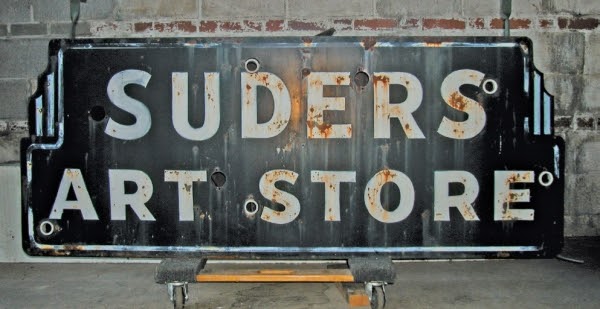
Two signs acquired -- ostensibly for our “Signs of Cincinnati” wall in the new home -- provide great examples. The first sign, from Big Top, a long-closed, independent burger joint in Mason, OH, is an example of a chase. The second example, from Suder’s Art Store, is a classic local sign that I had no inkling would ever come down. But, now it sits in the museum’s restoration shop.
The “Big Top” saga traces back six years ago, when I first began receiving phone calls and e-mails about this cool sign on a boarded-up building. To find the owner, I called the city of Mason and contacted other area businesses. I got the owner’s name, and was told he owned a number of pizza establishments. I called several of them asking to speak to the owner. He was never there. Employees offered to take messages, but wouldn’t give out his number. Never a return call.
Late last year, the property was listed for sale. The realtor facilitated talking to the owner in person. After six years, and with help from our friends at United-Maier Signs, we acquired the sign. But, time had taken its toll. In 2005, the paint on the sheetmetal was still in relatively good shape. But, six years later, almost no paint remained. Typically, we don’t like to repaint signs we acquire.
Even worse, a huge crease marred the bottom cabinet of the three-tiered sign. A truck had probably backed into the hapless icon. Its entire structural integrity had been compromised. United-Maier removed it in one piece, and the sign sits in their shop, awaiting its future.
The “Suder’s” sign proceeded differently. It had hung since the late 1930s on this well-known family business inThe romantic notion of Tod cruising for signs is just that. the Over-the-Rhine area of Cincinnati. Once a thriving community, Over-the-Rhine had suffered urban decay. Somehow, the business persevered in supplying lettering enamel, brushes and goldleaf.
In the last five years, the area experienced redevelopment, and the neighborhood shows signs of new vitality. But, the sign continued to experience the typical decay of a sheetmetal, neon sign. The owners decided to remove it -- unbeknownst to the museum.
Dauber (aka Jim Farr), a well-known auto pinstriper and gilder, told us about the sign’s removal. He said customers told the Suder family to donate the sign to the museum.
They agreed. To sweeten the deal, Dauber offered to donate a new sign for the business, which he’ll design in the style of the original.
The sign awaits neon repair and rewiring. The chipped paint and rusted sheetmetal -- the sign’s earned patina -- will remain. The neon will be replaced and glow once again. An era of the sign’s history ends, but its future is secure.

Tuesday, April 19, 2011

Teresa Does It Again

Once again, Teresa Young, longtime leader and supporter of the visual communications industry, has taken my feeble efforts and turned it into an entertaining story of one of our recent acquisitions, the Big Top sign. 

Click here to read her blog.  You'll be glad you did!

Monday, April 11, 2011

Sign Contest and Online Auction Highlight April Activities

Show Us a Sign!
Do you have a favorite sign or a favorite photo of a sign? Will you share it with us? The American Sign Museum is proud to sponsor the Show Us a Sign contest with Cincinnati Magazine. We're asking you to share a favorite sign on Cincinnati Magazine's website, and you could win a great prize in the process. Prizes include lifetime membership to the American Sign Museum and a $250 gift certificate to a Jeff Ruby restaurant.  Signs are not limited to the Cincinnati area, they can be from anywhere!  So Show Us a Sign! Contest ends May 14.

Online Auction Offers Deep Discounts for Sign Supplies, Services, Equipment, Show Booths, Magazine Ads...
Booth at 2012 Expo

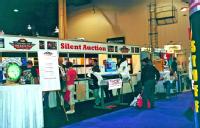
If you work in the sign industry, there is something for you at our online auction now through April 30.  In years past, our major annual fundraiser was held at the International Sign Association Sign Expo.  This year, it will finish at the Expo, but EVERYONE who has access to the internet has access to the auction.  No need to be present at the Expo.

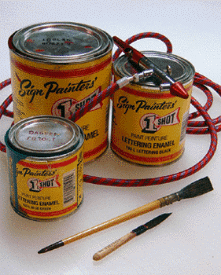
1 Shot

$500 Gift Certificate


The auction will run from April 1, 2011 to April 30, 2011, with proceeds going to the American Sign Museum's operating budget, and especially the acquisition and restoration of signs. Auction items include products and services, equipment and software that you use everyday. And for the product manufacturers, there are full-page ads in industry publications and booth space at sign shows. Now's the perfect time to view all the items, set up to watch items of special interest, or go ahead and bid!
Full Page 4-color ad space


This is your opportunity to get some great deals on things you use anyway, so why not join in the fun and support your American Sign Museum in the process?  Do it now!


HP H35500 flatbed/roll-to-roll printer